For many around the world, that moment is happening right now — with olive wood from the Holy Land.

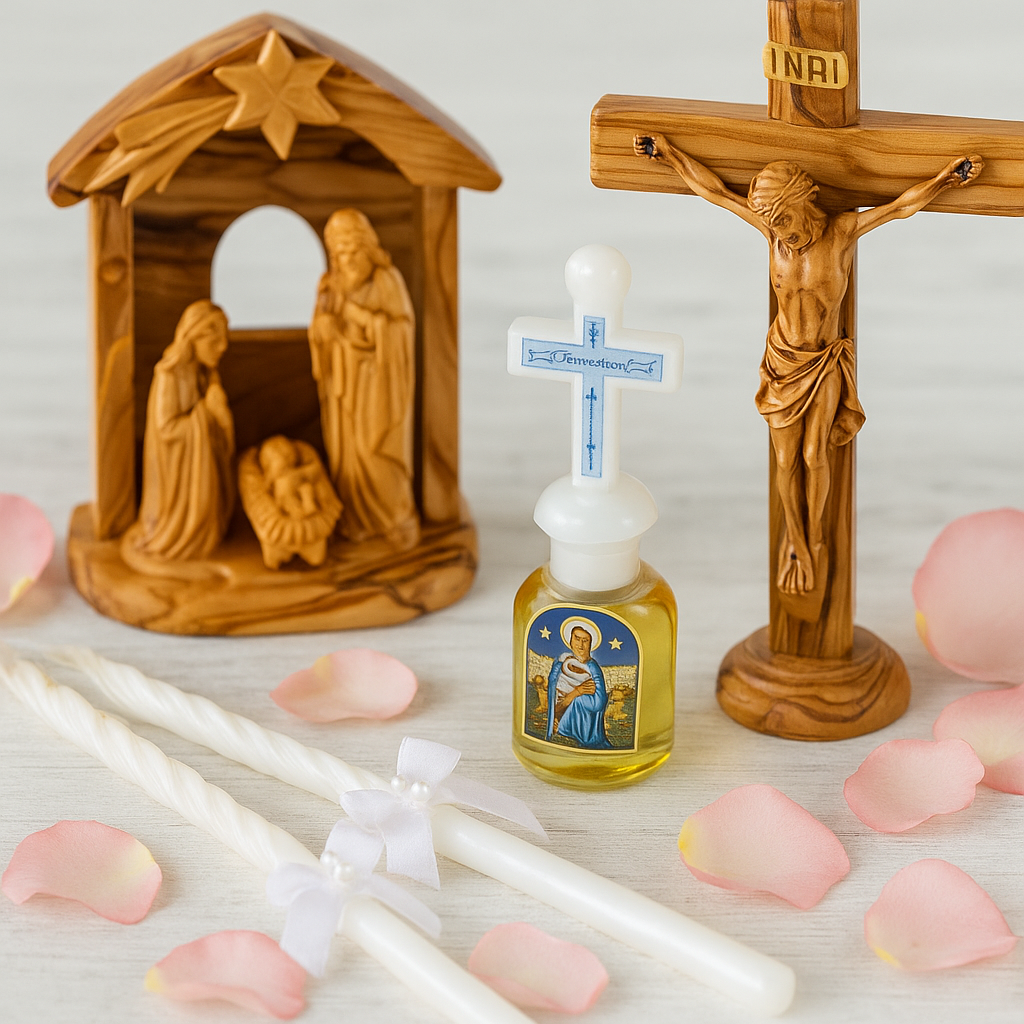
At first glance, it looks simple: a smooth cross, a carved angel, a nativity set.
But once you hold a real olive-wood piece from Bethlehem, you feel it — the depth, the warmth, the history sitting inside the grain.
More people are discovering that this material carries a story far bigger than its size.
And quietly, without making noise, it’s becoming one of the most sought-after natural materials in faith communities, artisan circles, and collectors’ markets.
Let’s explore why.
1. Trees That Carry Centuries in Their Branches

Olive trees don’t grow like other trees.
They grow slowly, stubbornly, and with incredible resilience. Many in the Holy Land have lived through empires, wars, droughts, and generations of families coming and going.
Because the trees are protected, artisans don’t cut them down.
Only naturally pruned branches are used — a practice that goes back hundreds of years.
That means the supply is limited from the start.
The older the tree, the more beautiful and dense the wood becomes… and the rarer it is.
In a world where everything is mass-produced, olive wood remains something nature controls, not factories.
2. A Grain Pattern With Its Own Personality

One of the reasons collectors are so drawn to olive wood is that no two pieces ever look alike.
The grain moves like flowing water — swirls, waves, ribbons of color — all formed by decades of sunlight, soil, and weather.
You can polish it, carve it, shape it…
but you can never repeat it.
Gold may shine, but olive wood lives.
It breathes in warm tones and shows the slow passage of time in every line.
It’s this individuality that makes people feel like they’re holding a piece of history rather than an object.
3. Rising Demand — But a Shrinking Supply

Here’s the part most people don’t realize:
Authentic olive-wood carving is becoming harder to find.
Several things are happening at once:
-
The number of skilled Bethlehem artisans is decreasing
-
Raw olive wood is more difficult to source
-
Global shipping costs have increased
-
Cheap imitation “olive wood” is flooding the market
All this has pushed the real material’s value upward.
People who bought olive-wood pieces years ago notice the difference immediately — in both price and quality.
This isn’t just a product anymore; it’s becoming a collectible.
4. A Craft That Survives on Hands, Heart, and Tradition

Real olive-wood carving can’t be done by machines.
It requires someone who has spent years watching their parents or grandparents shape this wood with precision and respect.
This tradition is one of the last remaining artisan crafts in Bethlehem, passed down like a treasure from one generation to the next.
When an artisan carves the Holy Family or shapes a cross, they’re not just working with wood…
they’re handling something sacred, something linked to their identity and their community.
That emotional connection is part of what gives olive-wood pieces their extraordinary value.
5. Imitations Have Spotlighted the Real Thing

Once mass-produced “Holy Land-style” souvenirs started appearing in global markets, buyers began to wake up.
The difference is obvious:
-
Real olive wood has weight
-
Its color deepens naturally
-
It carries a soft, pleasant aroma
-
The grain looks like artwork
-
It becomes more beautiful with age
People now want authenticity more than ever.
And because it’s harder to find, the real material has become even more desirable.
It’s the classic rule of value:
When the world is full of copies, the original becomes priceless.
6. A Material That Ages Like Fine Art

Unlike metals, olive wood changes over time.
It matures, darkens, and becomes richer, developing a character stronger than when it was new.
A family cross or nativity set carved today will look even better 10 or 20 years from now.
That natural transformation is something people fall in love with — a sense that the piece grows with you, collects memories, and gains beauty the longer it stays in your home.
You can polish gold and still have the same piece.
But olive wood?
It evolves.
7. A Legacy People Pass Down

There’s a reason so many families keep olive-wood items as treasured heirlooms.
A rosary from Bethlehem…
A hand-carved angel…
A nativity set that becomes part of every Christmas…
These aren’t simple decorations.
They’re reminders of faith, heritage, and the Holy Land itself.
Gold is purchased to be stored.
Olive wood is purchased to be loved.
And that makes it more than valuable — it makes it meaningful.
So, Is Olive Wood Replacing Gold?
Maybe not in wealth markets.
But in the world of handcrafted art, spiritual symbolism, and cultural history?
It’s already happening.
Olive wood holds something no precious metal can imitate:
-
A story hundreds of years long
-
A connection to a sacred land
-
A tradition held by the last Christian artisans of Bethlehem
-
A beauty that time only improves
That’s why more people today see olive wood not just as a material, but as a treasure — a piece of the Holy Land that carries faith, beauty, and history in every grain.


Comments
Post a Comment